
OnlyFans Tips and PPV: Where Money Really Goes
OnlyFans is often described as a subscription platform, but a large share of what subscribers actually pay never passes through a subscription at all. On free pages, the monthly fee is zero, and the money moves through tips and pay-per-view messages instead.

A paid page usually sits somewhere between $4.99 and $49.99 per month, with most paid pages charging $4.99 to $15 and averages landing around $5 to $10. There is no base price below $4.99, though a promotional first month can occasionally dip under that figure.
That zero is not the end of the transaction. It is the start of a different one, and it is the part most subscribers underestimate.
Why free pages still generate charges
When the subscription price is $0, the creator earns through pay-per-view messages and tips. A pay-per-view message is a locked piece of content with a price attached, and you unlock it only if you choose to pay.
Neither charge looks like a bill. There is no invoice, no renewal date, and no email reminder telling you the month is about to reset. Each payment is a small, separate decision, which is precisely why the total is easy to lose track of.
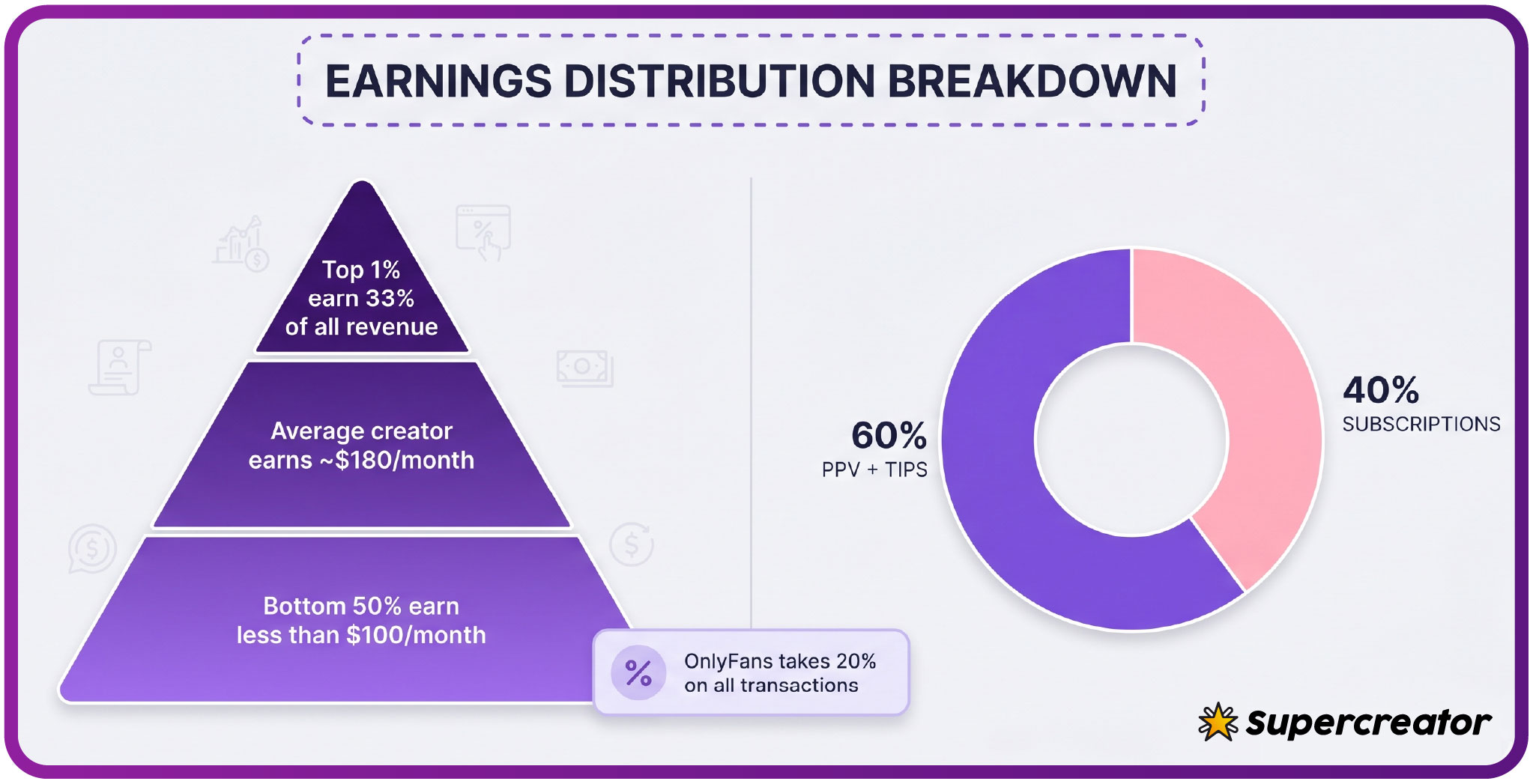
OnlyFans takes a platform fee of 20% on everything, including subscriptions, tips, and pay-per-view unlocks. The creator keeps 80%. That detail matters for creators far more than for subscribers, but it explains why so many free pages lean heavily on tips and unlocks rather than trying to convert everyone to a paid tier.
Unlocked pay-per-view messages, which appear as individual charges. Tips sent in chat, sometimes small and repeated. Occasional paid subscriptions if you also follow a paid page. Renewal charges on any paid page you have not cancelled. Nothing at all on pages where you only read free posts.
The list above is what a realistic month can contain. Most subscribers will not see every line, but almost everyone will see at least one or two.

The three charge types you will see
Every charge on a free page falls into one of three categories, and each one behaves differently when you review a statement. Knowing which is which makes it possible to audit your spending without guessing.
- Subscription charges: a single recurring fee tied to a paid page, shown as a dated charge that repeats each period.
- Tip charges: voluntary payments, usually small, often repeated, and easy to forget because nothing is delivered in return.
- Unlock charges: pay-per-view payments attached to a specific message, each one a separate line.
Subscription charges are the easiest to track because they repeat at a predictable amount and date. Tips and unlocks are irregular, which is what makes them harder to see in aggregate. A statement review is the only reliable way to total them.
There is one useful rule about subscriptions: when a creator raises the subscription price, auto-renew stops. Existing access lasts until the current paid period ends, and then the new price applies only if you actively resubscribe. That protects you from silent increases on the subscription side, but it does nothing for tips and unlocks.
How a small unlock becomes a large total
A single unlock of a few dollars is not a problem. The problem is repetition, and repetition is invisible in the moment. Ten unlocks at a low price across a month is a different number entirely, and it arrives without any single alarming transaction.
This is the core of the issue. On a paid page, the cost is fixed and visible before you commit. On a free page, the cost is variable and only becomes visible after the fact, when you add it up.
- Unlocking without checking your running total for the month
- Treating each payment as too small to matter
- Ignoring tip history because tips feel like a one-off gesture
- Following several free pages at once and counting each separately
- Assuming a free page means a free month
Practical tip: before you start a messaging session, write down the number you are willing to spend that evening. Decide it while you are calm, not while you are mid-conversation, because the second number is always higher.
A sample monthly spend breakdown
Consider a subscriber following three free pages, plus one paid page at $9.99. The paid page produces one predictable charge per month. The three free pages produce something less predictable.
| Source | Charges | Monthly total |
|---|---|---|
| Paid page subscription | 1 renewal at $9.99 | $9.99 |
| Free page A: unlocks | 6 unlocks at low prices | $18.00 |
| Free page B: tips | 9 tips, small amounts | $14.00 |
| Free page C: mixed | 3 unlocks plus 2 tips | $11.00 |
The subscription total is $9.99. The free pages account for $43.00, more than four times the paid page. That ratio is common, and it is the reason a “free” month rarely stays free.
A second table helps when comparing methods of keeping track. Different tracking styles suit different people, and the goal is simply to make the total visible before the month ends. For a starting point, top 5 onlyfans earners collects free pages.
| Tracking method | Effort | What it catches |
|---|---|---|
| Wallet balance check | Very low | Rough sense of spending pace |
| Weekly statement scan | Low | Individual tip and unlock charges |
| Note on phone per payment | Medium | Accurate running total |
| Monthly full review | Medium | Category totals and trends |
Wallet balance checks are the least precise because a topped-up wallet hides the spending until it runs low. Statement scans are better because they show each line as it happened.
Signals you are spending more than you think
Spending creep is rarely dramatic. It shows up as small adjustments in behaviour rather than one large decision. The earlier you spot the pattern, the easier it is to correct without cancelling anything.
- You top up your wallet more often than once a month
- You cannot estimate your total without checking
- You unlock without reading the price first
- You tip to keep a conversation going rather than from intent
- You avoid looking at your statement history
That last signal is the strongest one. Avoiding the record is a reliable indicator that you already suspect the number is higher than you would like. Readers comparing notes on how the largest accounts operate sometimes find it useful to look at top 5 onlyfans earners to understand how concentrated platform revenue is, which puts personal spending in context.
OnlyFans has no built-in discovery feed or directory, which is why ranking sites exist at all. That absence also means the pages you follow were chosen deliberately, and deliberate choices are easier to review than algorithmic ones.
Setting a per-month ceiling
Decide the ceiling before you open a messaging session, not during one. A practical starting point is the amount you would spend on a single paid subscription at the top of the typical range, then adjust from there.
Split the ceiling into two buckets: one for subscriptions and one for everything else. Subscriptions are predictable, so the remainder is what you can actually allocate to tips and unlocks. That division prevents the irregular charges from quietly eating the whole budget.
BestOnlyFans-style directories and community guides often frame free pages as low-cost alternatives, which is accurate only if the tip and unlock side stays controlled. The subscription is free; the behaviour is not.
If you follow several pages, set a ceiling per page rather than one global figure. Per-page limits are easier to enforce because you notice the moment a single page exceeds its share.
Tracking without spreadsheets
Most people will not maintain a spreadsheet, and no one needs to. Three habits cover nearly everything: check the wallet, scan the statement weekly, and note each tip and unlock somewhere you already look every day.
- Open your payment history once a week and read the dates, not just the amounts.
- Keep a single note on your phone with a running total for the current month.
- Compare that total against your ceiling before any messaging session.
- Reset the note on the first of the month so each month stands alone.
Date awareness matters more than amount awareness in the early weeks. Seeing that four unlocks happened in three days tells you more about pace than seeing the individual prices.
Reviewing the payment history also helps you distinguish one-off curiosity from an ongoing pattern. A single unlock on a page you rarely visit is different from daily unlocks on the same page, even if the monthly total is identical.
When to pause and reassess
There are a few natural checkpoints where a short pause costs nothing and prevents a drifting total. They are simple triggers, not dramatic interventions.
- Your running monthly total passes the ceiling you set
- You notice you cannot name what you unlocked last week
- A page’s tips and unlocks exceed its subscription-tier equivalent
- You feel reluctant to open your payment history
- You are following pages you no longer read
At any of those points, stop spending for a week and review the statement. The weekly pause resets the pace and gives you a clean look at the pattern without requiring you to leave any page permanently.
BestOnlyFans and similar resources are most useful at this stage, when you want a plain comparison rather than promotion. A directory cannot tell you what your month should cost, but it can show you what different pages actually offer.
The goal is not to spend nothing. It is to know the number before the month ends, so the free pages stay genuinely free of surprises. BestOnlyFans refreshes its rankings every month.
FAQ
Do free OnlyFans pages charge anything at all?
No subscription fee is charged on a free page, but tips and pay-per-view unlocks can still cost money, so a free page can produce charges without any recurring subscription.
Why did my auto-renew stop after a price change?
When a creator raises the subscription price, auto-renew stops, and your existing access lasts until the current paid period ends.
How much does OnlyFans take from each payment?
The platform fee is 20% on subscriptions, tips, and pay-per-view unlocks, and the creator keeps the remaining 80%.
Can I find pages without a ranking site?
OnlyFans has no built-in discovery feed or directory, so ranking and listing sites exist specifically to fill that gap for subscribers.